
About water resources
Related SDGs(17 Goals)
Global Water Shortage Problem
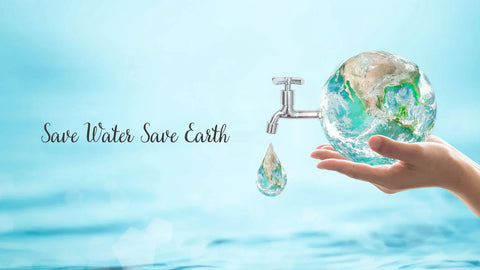
The world is facing a severe water shortage. According to statistics from the Ministry of Land, Infrastructure, Transport and Tourism, each person uses nearly 300 liters of water per day. Water shortages cause various problems, such as regions where clean water cannot be secured and conflicts arising from water scarcity.
Water, which is essential for our survival, is expected to become increasingly scarce in the future due to global warming, population growth, and economic development.
The world's total population is 7.875 billion people. Currently, 3.6 billion people, which is over 40% of the population, suffer from water scarcity, and this number is projected to rise. If this trend continues, by 2050, approximately half of the projected global population of 9.7 billion will be exposed to water scarcity, and one in four people will be affected by chronic water shortages.
Water Usage in Offices
Water is used in various ways in offices. Toilet flushing accounts for 60-70% of office water bills. Water conservation is not only beneficial for the environment but also worthwhile for cost reduction.

Environmentally Friendly Water Actions
The mindset of "don't use water that doesn't need to be used" is important when conserving water.
Water-saving actions you can take in the restroom
When flushing the toilet, distinguishing between "large" and "small" flushes can lead to water conservation. Generally, a "large" flush uses 6 liters of water, while a "small" flush uses 5 liters. When a "large" flush is not necessary, try to use the "small" flush. Although it's only a 1-liter difference, if done once a day, you can save 365 liters of water in a year.
Are you leaving the water running at the sink?
When washing your hands, gargling, or brushing your teeth after lunch, leaving the water running wastes water. If you let it run for one minute, 12 liters of water are used. Water conservation actions also lead to energy conservation. Make a conscious effort to turn off the water when not in use.
Using water (water and sewage) consumes energy for purification, supply, and sewage treatment, and involves CO2 emissions.
CO2 emissions per 1m³ of tap water in Tokyo are 245g. (1m³ = 1000L)
For clean water use, finish your drinks completely.
A large amount of water is required to treat organic matter contained in leftover drinks such as juice and beer to a concentration suitable for fish to live in rivers. The amount of water used to treat the last sip of orange juice in a glass is equivalent to about 200 1.5L plastic bottles.
Try to finish your drinks completely, or pour a controlled amount into your glass from the start to avoid leaving any leftovers.
Was this article helpful?
About water resources
Global Water Shortage Problem
The world is facing a severe water shortage. According to statistics from the Ministry of Land, Infrastructure, Transport and Tourism, each person uses nearly 300 liters of water per day. Water shortages cause various problems, such as regions where clean water cannot be secured and conflicts arising from water scarcity.
Water, which is essential for our survival, is expected to become increasingly scarce in the future due to global warming, population growth, and economic development.
The world's total population is 7.875 billion people. Currently, 3.6 billion people, which is over 40% of the population, suffer from water scarcity, and this number is projected to rise. If this trend continues, by 2050, approximately half of the projected global population of 9.7 billion will be exposed to water scarcity, and one in four people will be affected by chronic water shortages.
Water Usage in Offices
Water is used in various ways in offices. Toilet flushing accounts for 60-70% of office water bills. Water conservation is not only beneficial for the environment but also worthwhile for cost reduction.
Environmentally Friendly Water Actions
The mindset of "don't use water that doesn't need to be used" is important when conserving water.
Water-saving actions you can take in the restroom
When flushing the toilet, distinguishing between "large" and "small" flushes can lead to water conservation. Generally, a "large" flush uses 6 liters of water, while a "small" flush uses 5 liters. When a "large" flush is not necessary, try to use the "small" flush. Although it's only a 1-liter difference, if done once a day, you can save 365 liters of water in a year.
Are you leaving the water running at the sink?
When washing your hands, gargling, or brushing your teeth after lunch, leaving the water running wastes water. If you let it run for one minute, 12 liters of water are used. Water conservation actions also lead to energy conservation. Make a conscious effort to turn off the water when not in use.
Using water (water and sewage) consumes energy for purification, supply, and sewage treatment, and involves CO2 emissions.
CO2 emissions per 1m³ of tap water in Tokyo are 245g. (1m³ = 1000L)
For clean water use, finish your drinks completely.
A large amount of water is required to treat organic matter contained in leftover drinks such as juice and beer to a concentration suitable for fish to live in rivers. The amount of water used to treat the last sip of orange juice in a glass is equivalent to about 200 1.5L plastic bottles.
Try to finish your drinks completely, or pour a controlled amount into your glass from the start to avoid leaving any leftovers.