
How to use AEDs / Where AEDs are located
Related SDGs(17 Goals)
An AED (Automated External Defibrillator) is a medical device that delivers an electrical shock to a heart in cardiac arrest – when the heart suddenly stops beating normally – to restore it to a normal rhythm. Using an AED to help someone can increase the survival rate from sudden cardiac arrest by approximately six times compared to only calling 119. Acting and providing assistance as quickly as possible can save a precious life. Let's review the essential information for emergencies.
How to Use an AED
Before Using an AED
- Check for hazards in the surroundings (e.g., traffic).
- Call for help from as many people as possible.
- Tap their shoulder and check for a response.
- Designate someone to call 119 and someone else to get an AED.
- Check for breathing by looking at the chest and chest movement (within 10 seconds).
- If there is no breathing, perform "chest compressions" (CPR).

Reference:
How to Use an AED
Please note: When an AED is opened, voice guidance will play. You can generally follow the voice guidance.
- AED Usage Conditions: Unconscious, not breathing normally, no pulse (for trained rescuers only).
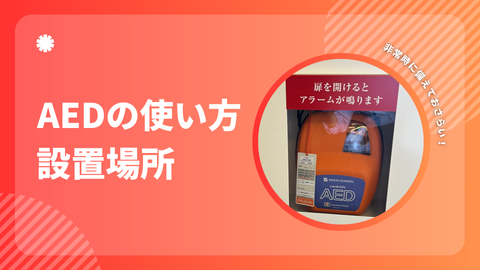
- Open the AED cover and take it out (an alarm will sound).
- Open the AED lid.
- Attach the pads to the upper right chest and left side of the rib cage.
- Deliver an electrical shock with the AED.

* There is a resuscitation tent behind the AED stand. Please use it for privacy or other purposes.

AED Locations
AEDs are installed at the following locations within Shinjuku Park Tower. Check where the closest AED is from your usual location.
- B1F Disaster Prevention Center (S Tower)
- 1F Information Desk (N Tower)
- 8F Business Restaurant
- 16F Elevator Hall (C Tower)
- 24F Elevator Hall (C Tower)
- 31F Elevator Hall (N, S Towers)

- This page is current as of July 23, 2024. The contents described are subject to interruption, discontinuation, or change without notice.
- While this content and information are created based on reliable external sources, this portal site and its operating company do not guarantee the accuracy of the content and information.
Was this article helpful?
How to use AEDs / Where AEDs are located
An AED (Automated External Defibrillator) is a medical device that delivers an electrical shock to a heart in cardiac arrest – when the heart suddenly stops beating normally – to restore it to a normal rhythm. Using an AED to help someone can increase the survival rate from sudden cardiac arrest by approximately six times compared to only calling 119. Acting and providing assistance as quickly as possible can save a precious life. Let's review the essential information for emergencies.
How to Use an AED
Before Using an AED
- Check for hazards in the surroundings (e.g., traffic).
- Call for help from as many people as possible.
- Tap their shoulder and check for a response.
- Designate someone to call 119 and someone else to get an AED.
- Check for breathing by looking at the chest and chest movement (within 10 seconds).
- If there is no breathing, perform "chest compressions" (CPR).
Reference:
How to Use an AED
Please note: When an AED is opened, voice guidance will play. You can generally follow the voice guidance.
- AED Usage Conditions: Unconscious, not breathing normally, no pulse (for trained rescuers only).
- Open the AED cover and take it out (an alarm will sound).
- Open the AED lid.
- Attach the pads to the upper right chest and left side of the rib cage.
- Deliver an electrical shock with the AED.
* There is a resuscitation tent behind the AED stand. Please use it for privacy or other purposes.
AED Locations
AEDs are installed at the following locations within Shinjuku Park Tower. Check where the closest AED is from your usual location.
- B1F Disaster Prevention Center (S Tower)
- 1F Information Desk (N Tower)
- 8F Business Restaurant
- 16F Elevator Hall (C Tower)
- 24F Elevator Hall (C Tower)
- 31F Elevator Hall (N, S Towers)
- This page is current as of July 23, 2024. The contents described are subject to interruption, discontinuation, or change without notice.
- While this content and information are created based on reliable external sources, this portal site and its operating company do not guarantee the accuracy of the content and information.